Bespoke AI Techno
Experiments in letting the music pick the pictures. Generated techno, and generated footage that is cut by what the song is doing.
Open playlist →On YouTube
Bespoke AI Techno is a playlist of experiments. The Ballads ask how to make a film for a song. These ask whether a song can play a film.
The idea is the same in all of them. Make a deck of footage. Measure every frame of it: how bright, how much detail, how big the crowd, how much colour, how much it moves. Measure the song the same way: the kick, the hi-hats, how spiky or noisy each note is, the pitch of the melody. Then let the song choose which frame is on screen. Nothing is composited and nothing is placed by hand.
All of it is generated. The people aren't real and nothing was filmed.
What made them
Local models on my own PC, run through ComfyUI:
- Music: ACE-Step 1.5.
- Stills, and restyling frames: Z-Image Turbo, text-to-image and image-to-image.
- Motion: Wan 2.1 image-to-video (14B) with the lightx2v 4-step LoRA.
- The abstract loops: AnimateDiff-Evolved on Stable Diffusion 1.5, with its camera LoRAs for pan and zoom.
- The cutting: a small Python program I call the chooser. It does the measuring and picks the frames.
The Rushmore pair
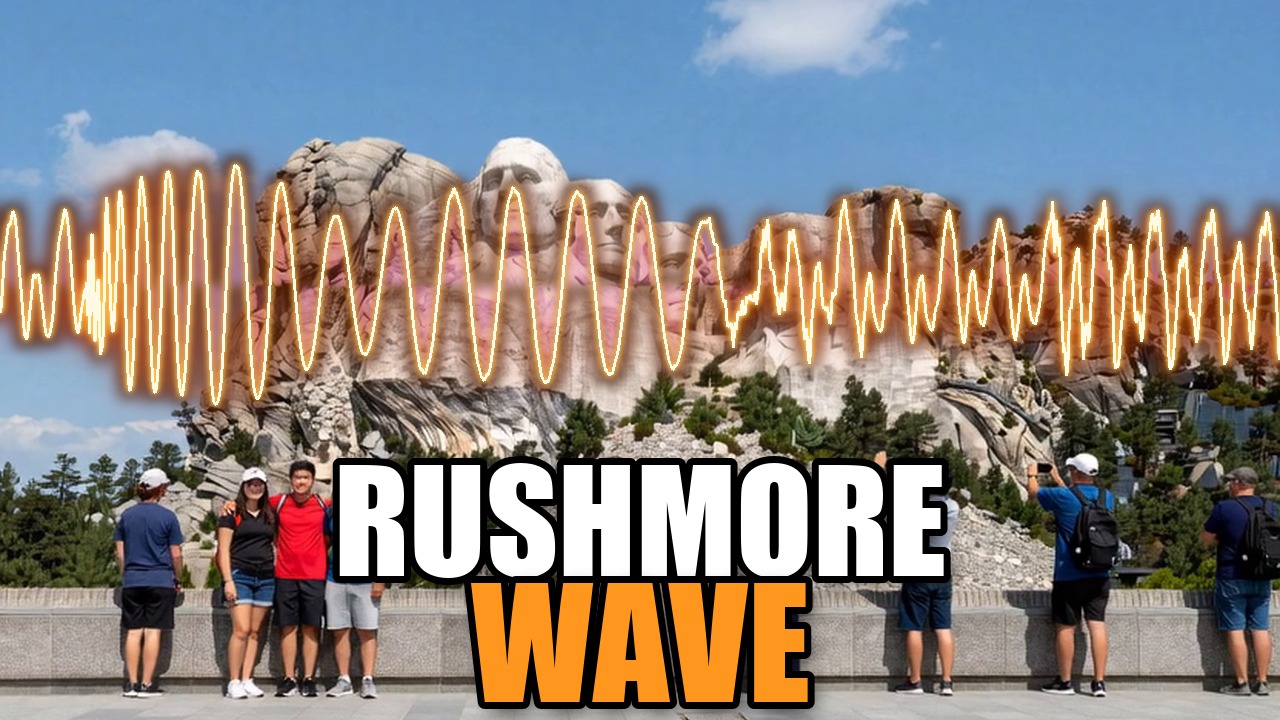
Rushmore Reality Break and Rushmore Wave are made from the same 30 seconds of footage: tourists at Mount Rushmore, generated as six linked 5-second Wan clips from one Z-Image keyframe, at 832×480 and 16 frames a second.
Every frame was then redrawn five more times with Z-Image, using one fixed seed: as 1970s film stock, a black-and-white engraving, a 1920s glass-plate photograph, night, and an alien planet with two moons. That gives a deck of 2,886 frames, the same moments in six versions of reality.
The track for Reality Break was generated at 136 bpm so that each 30-second pass through the clip is exactly 17 bars. The chooser picks one whole frame for every sixteenth of a second. The kick decides how big the crowd is. Fast hi-hats make the carving jump between renderings. When the melody comes in, its pitch climbs from night to the alien sky.
Rushmore Wave started as a goofy idea. Give each frame a value from what you can measure in it, give every eighth note a value from the shape of its waveform, and let the song look up the frame that matches. A 30-second clock sweeps through the clip, so the same people keep coming back round while the song pulls them into a different world each time.
I uploaded both at their original 480p. I liked it better than the upscales.
Paris and the material loops
Paris Walk is a crowd on the plaza at the Eiffel Tower, built up from one fixed Z-Image still. After a long day of trying other things, what worked was one very short Wan shot per beat, nine frames long, with small figures (pigeons, a herd of elephants, fire, a woman in red) arriving on the kick.
The two Hypnagogic videos are abstract. AnimateDiff draws short loops of single materials (crystal, ferrofluid, gears, tiles, ball bearings), each one hitting on the kick and dying away before the next. Two things I learned: sand never reads on screen, and a clip that holds still breaks the rhythm. So every clip pans or zooms in one direction. The long cut places 851 one-beat clips, 17 two-beat clips and 30 four-beat clips.
Not everything worked. Restyling every frame of a film gave a lovely time-lapse in places and too much flicker overall. It is a texture, not a rhythm.
Also here
- Finite State Ballads: the same tools, used to tell stories.
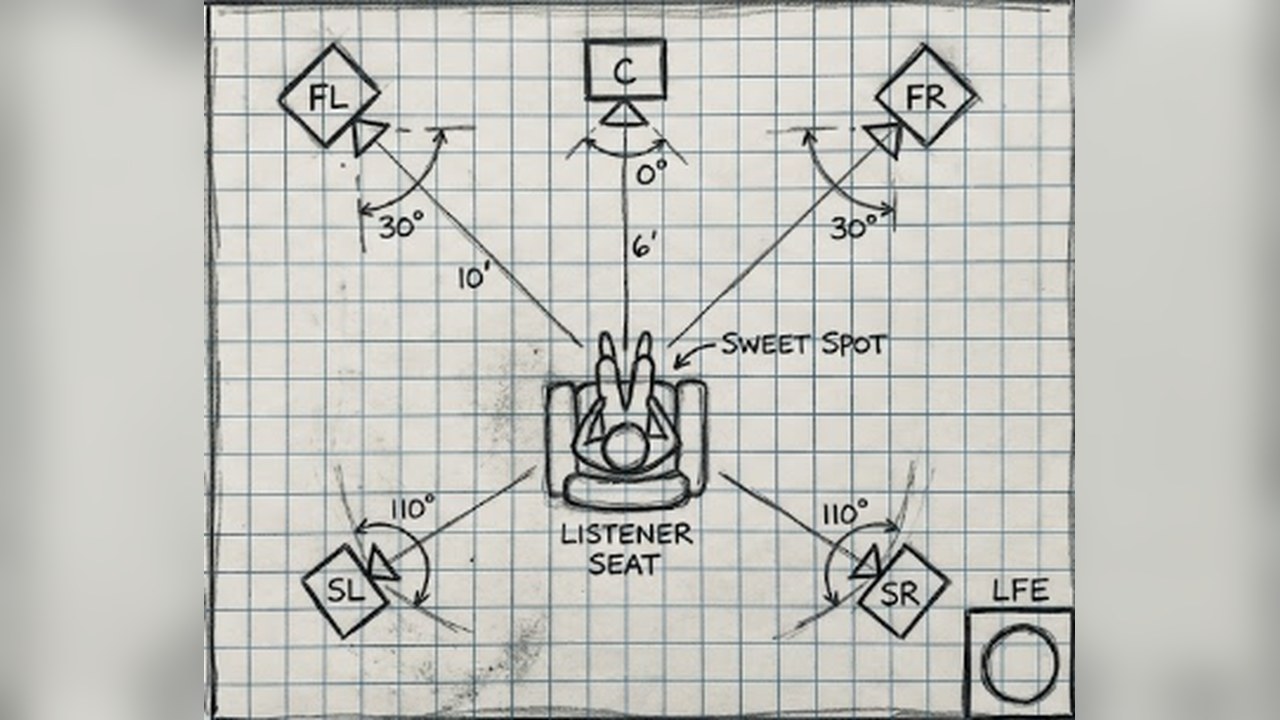
- Surround 5.1 | Drones | LFE: the older work, with no generative models at all.
- The games: look-and-find, one picture to a room.